
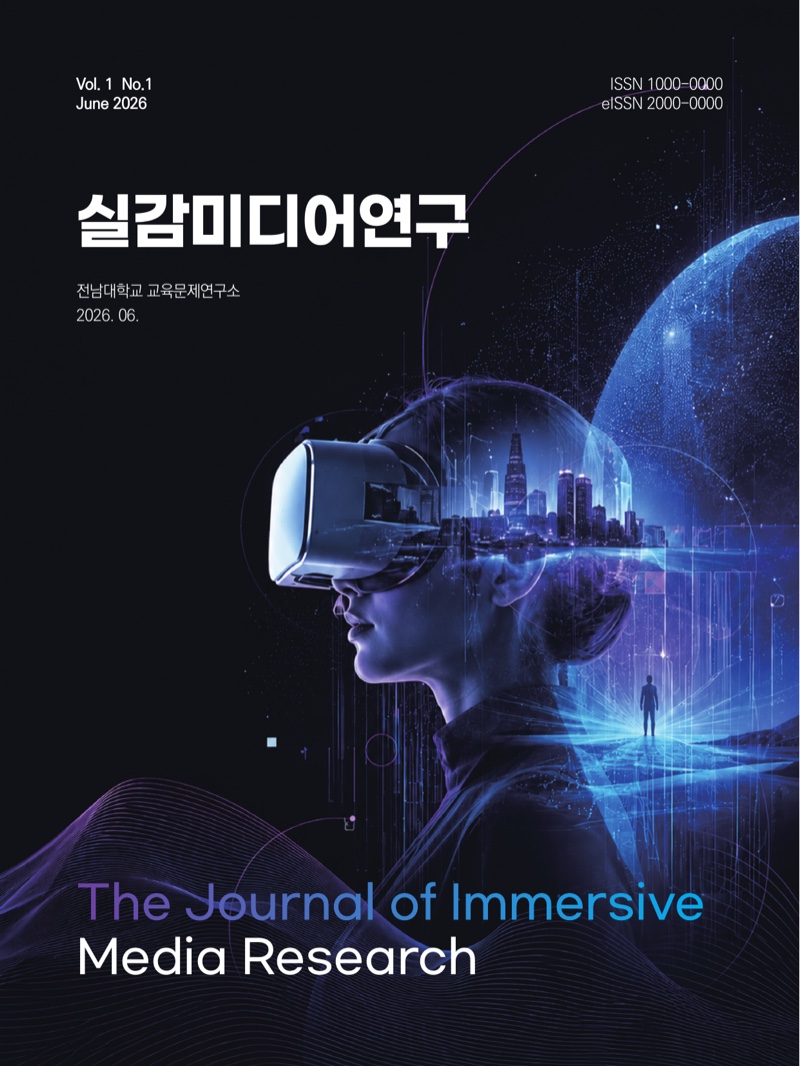
Research Article
Diffusion of the Impact of VR-Based Healthcare Education
1 Postdoctoral Researcher, The Institute of Educational Research, Chonnam National University
Published: June 2026 · Vol. 1 No. 1 · pp. 41-48
Full Text
Abstract
This article examines the educational effects and practical limitations of VR-based healthcare education and discusses directions for expanding its impact. Because healthcare education faces constraints in repeated practice with real patients and the reproduction of high-risk clinical situations, VR-based education has received attention as an alternative learning environment that provides safe, repeated learning and immersive clinical experiences. VR-based healthcare education can support learning engagement, clinical performance confidence, skill proficiency, clinical judgment, and problem-solving competencies, and it has the potential to expand into learning data-based feedback and personalized learning. However, equipment and content development burdens, VR sickness and fatigue, learner accessibility, verification of transfer to actual clinical performance, and ethical issues related to data use should be considered for stable expansion. In this regard, its impact should be expanded not through the quantitative dissemination of VR content alone, but by connecting learners’ experiences and performance data to educational outcomes and extending them to classroom and practical training in educational institutions, clinical education, community-based digital rehabilitation, and remote healthcare education services.